







Directing danger away
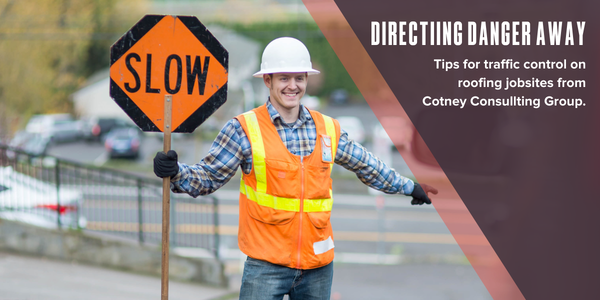
By Cotney Consulting Group.
Tips for traffic control on roofing jobsites from Cotney Consulting Group.
Roofing work doesn’t happen in isolation. Whether you’re setting up in a busy commercial parking lot or a tight residential street, every project involves the movement of delivery trucks, crew vehicles, equipment trailers and pedestrians. That’s why jobsite traffic control isn’t just a construction concern; it’s an essential roofing safety.
Every year, preventable incidents occur because sites aren’t properly marked, flaggers aren’t trained or vehicles and pedestrians move too close to active work areas. A simple lapse in control can cause property damage, injuries or worse. The key is establishing a controlled flow before the first truck arrives.
Plan before you park
Effective traffic control starts with pre-planning. Before the job begins, walk the site and map out every expected movement of materials, dumpsters, cranes, crew parking andpedestrian access. Identify choke points, blind corners and public walkways.
Always designate a single entry and exit route for material deliveries. If the space is tight, schedule deliveries during off-peak hours. Keep drive lanes wide enough for emergency vehicles and separate foot traffic from vehicle routes.
Use the right signs and barriers
Cones, barricades and signage aren’t optional; they’re your first layer of defense. Use bright, reflective cones and A-frame barricades to guide vehicles and block off danger zones. Signs should be visible, simple and consistent: “Roofing work ahead,” “slow — workers present,” “delivery entrance only.”
If work is near public sidewalks or parking lots, install rope or caution tape barriers to keep pedestrians out. The goal isn’t to inconvenience anyone; it’s to keep everyone predictable and safe.
Assign a spotter or flag person
Roofing projects often involve multiple vehicles backing in, unloading or positioning cranes and lifts. Never rely on mirrors or assumptions. A trained spotter or flag person is worth their weight in gold.
Equip them with high-visibility clothing, gloves and radios. Establish clear hand signals. Confusion disappears when one person controls all movement in the work zone, andaccidents follow suit.
Manage deliveries like clockwork
Material deliveries are often the most chaotic part of the day. Coordinate arrival times so trucks don’t stack up or idle in live traffic. Communicate with suppliers; they must know the site layout, access points and unloading areas.
Assign one person to meet each delivery and guide them safely to the drop zone. The quicker and smoother it goes, the less exposure to moving vehicles and public interference.
Keep the public informed
Courtesy is part of safety if you’re working near businesses or homes. Notify nearby occupants when deliveries or crane work will block access. Post signage the day before large deliveries. A little transparency reduces frustration and prevents pedestrians from wandering through restricted zones.
Stay alert and review daily
Traffic conditions can change overnight. Revisit your control plan each morning, check for new hazards, relocated equipment or unexpected access changes. A five-minute discussion in the morning huddle keeps everyone aligned.
Roofers are already exposed to enough hazards on the roof; don’t add avoidable ground-level risks. Traffic control concerns direction, awareness and accountability. There are three things every roofing professional should take seriously.
Learn more about Cotney Consulting Group in their Coffee Shop Directory or visit www.cotneyconsulting.com.
Recommended For You
American Ladder Institute releases 2024 Ladder Safety Training and Citations Survey
Read More ...
Social Distancing on the Roof
Read More ...
The signs most companies miss
Read More ...
UP TO THE MINUTE






Comments
Leave a Reply
Have an account? Login to leave a comment!
Sign In