







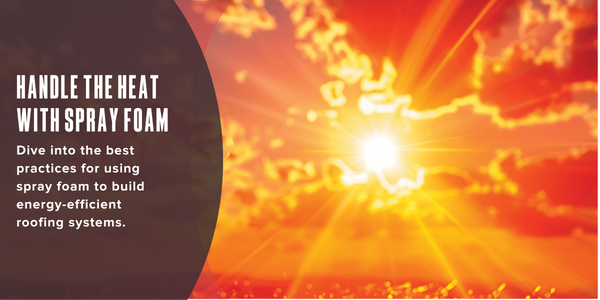
Handle the heat with spray foam
By Emma Peterson.
Dive into the best practices for using spray foam to build energy-efficient roofing systems.
Across the globe, heat waves are becoming more common. The Center for Climate and Energy Solutions reports that “in cities across the United States, the average rate of extreme heat events increased from two per year in the 1960s to ten per year between 2010 and 2020. Additionally, as of 2024, the average length of heat-wave season in the U.S. has increased by 46 days since the 1960s.” And this trend is unlikely to change in the next few years. In fact, looking ahead there are predictions that “the annual number of days with a heat index above 100°F will double and days with a heat index above 105° F will triple, compared to the end of the 20th century.”
From rising energy costs to heat-related illness in urban areas, this increasing frequency of extreme heat waves creates unique challenges. One of the big ways we can work to protect our communities through these changing weather patterns is by building with materials that are uniquely suited to handle the heat – materials like spray foam roofing.
Why spray foam?
Spray foam roofing is known for its exceptional energy saving capabilities as well as its low environmental impact. How does spray foam save energy and the environment? Spray foam roofing not only acts as a roof but also added insulation. This reduces the amount of heat transfer happening through the roof, meaning that homes stay cooler in the summer and warmer in the winter. Some reports indicate that “spray foam roofing can reduce energy costs by up to 30%.”
Not only does this energy-efficiency make buildings more comfortable and save owners some money, but it also makes spray foam a very eco-friendly choice. By reducing the amount of heating and cooling that must be done to maintain a comfortable interior environment, spray foam lowers greenhouse gas emissions, helping our entire planet stay more comfortable.
Working with spray foam this summer
With all these benefits, it's no wonder that owners who are struggling to beat the heat this summer would be interested in getting a spray foam roof on their home ASAP. There are a few strategies that the experts at Enverge recommend roofers adhere to in order to successfully and safely install spray foam in the warm season:
- Keep your crew safe: The most important part of working with spray foam in the summer is making sure your people stay safe. Consider investing in cooling vests, portable fans and other equipment that helps prevent heat stress. Additionally, ensure your team is properly trained to recognize the signs of heat-related illness and know proper protocols in the case of an emergency.
- Make sure your materials stay cool: Heat can wreak havoc on formulas and chemicals if not properly monitored. Make sure you are storing your spray foam products according to manufacturer’s instructions, even if that means investing in insulated boxes or coolers to keep them in the optimal temperature range.
- Double and triple check your equipment: Heat can also affect your equipment. Sometimes the issue is obvious, like a spray gun overheating, and sometimes it's more subtle, like a material thickening in the heat and clogging a component. To avoid both, make sure your equipment is properly calibrated and maintained for the temperatures.
- Adjust your operations: You may need to adapt your application techniques when things get hot. This can look like applying thinner passes of foam for better heat dissipation, increasing the distance between your sprayer and the substrate and timing your work for the cooler mornings and evenings (avoiding the heat of midday).
- Keep the substrate in mind: Remember that the heat is not only impacting the product you’re putting down, but also the substrate you are putting it on. Substrates that are too hot can cause issues with adhesion and performance. A good plan is to bring an infrared thermometer to check temperatures to ensure anything you install adheres and cure correctly.
These are just some of the tips and tricks the Enverge team has for installing spray foam in the heat. If you’re planning on helping clients stay cool with a spray foam installation this summer, make sure to check out the whole article!
Original photo source: Enverge
Learn more about Enverge in their Coffee Shop Directory or on envergesprayfoam.com.
About the author

Emma is the senior content developer at The Coffee Shops and AskARoofer™. When she's not working or overthinking everything a little bit, she enjoys watching movies with friends, attending concerts and trying to cook new recipes.
Recommended For You

Free classified ads for Hurricane Helene and Hurricane Milton response
Read More ...
Ensuring performance in tough conditions
Read More ...
Protecting roofs from extreme weather events with Polyglass
Read More ...
UP TO THE MINUTE





Comments
Leave a Reply
Have an account? Login to leave a comment!
Sign In