








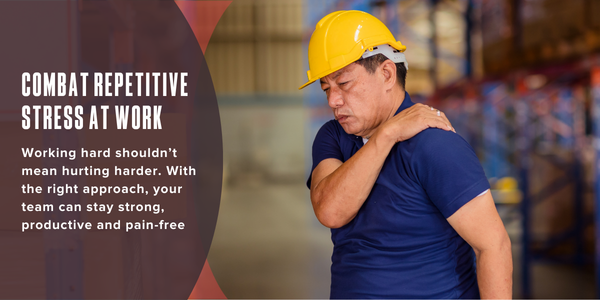
Combat repetitive stress at work
By Cotney Consulting Group.
Working hard shouldn’t mean hurting harder. With the right approach, your team can stay strong, productive and pain-free
In the roofing industry, the focus on safety often centers around high-risk hazards like falls, heat stress or electrical shocks. But another threat creeps in quietly, one motion at a time. Repetitive stress injuries (RSIs), also known as musculoskeletal disorders (MSDs), are among the most common and overlooked injuries in the trades.
For roofers, these injuries aren’t caused by dramatic incidents. They develop slowly through repeated lifting, hammering, kneeling, bending or twisting. By the time pain appears, the damage is often done. If left unchecked, repetitive stress can sideline skilled workers, reduce productivity and create long-term health issues.
Here’s how roofing professionals can recognize, prevent and reduce repetitive stress on the job before it becomes a career-ending issue.
What are repetitive stress injuries?
RSIs result from repeated motions or sustained awkward postures that strain muscles, tendons, nerves or joints. These injuries typically build over time and are easy to miss until symptoms become chronic.
Common RSIs in roofing include:
- Tendonitis: Inflammation of the tendons, often in shoulders or elbows
- Carpal tunnel syndrome: Nerve compression in the wrist
- Trigger finger: When a finger becomes stuck in a bent position
- Bursitis: Inflammation of the small fluid sacs that cushion joints
- Lower back strain: Caused by poor lifting technique or long hours in bent positions
- Knee and joint degeneration: From prolonged kneeling on hard surfaces
Unlike traumatic injuries, repetitive stress is preventable with consistent awareness and small changes in daily routines.
Risk factors on the roof
Roofing crews face multiple conditions that elevate RSI risk:
- Repetitive movements like swinging a hammer, screwing fasteners or lifting bundles
- Awkward body positions, such as bending forward while cutting or nailing
- Vibration exposure from power tools
- Prolonged static postures, like kneeling or crouching for extended periods
- Insufficient rest or recovery, especially during peak project seasons
- Cold weather, which tightens muscles and reduces flexibility
Understanding what leads to these injuries is the first step to changing habits and reducing long-term strain.
Recognize the warning signs
Workers and supervisors must be able to identify the early symptoms of repetitive stress:
- Tingling, numbness or “pins and needles” sensation in fingers or limbs
- Pain that worsens during or after work
- Swelling, stiffness or reduced range of motion
- Weak grip strength or frequent dropping of tools
- Pain that lingers overnight or into the next shift
These signs shouldn’t be ignored or pushed through. Early intervention prevents long-term damage.
Prevention strategies: Small changes, big impact
Here are practical ways roofing crews can reduce repetitive stress without slowing down the job:
1 - Rotate tasks when possible
Switch between high-strain and low-strain tasks to give muscle groups a break. If one worker spends the entire day fastening decking, rotate them into cleanup or layout work partway through the shift.
2 - Stretch before work
Light stretching before the day begins can loosen muscles and prepare the body for physical effort. Focus on wrists, shoulders, back and legs. Encourage crews to stretch during breaks as well.
3 - Use the right tools
Tools with padded handles, vibration reduction and ergonomic grips can significantly lower strain. Encourage the use of battery-powered drivers over manual screwguns for larger jobs.
4 - Improve body mechanics
Train workers on proper lifting and bending techniques. Use the legs, not the back, to lift. Avoid twisting while carrying heavy loads. Kneel on pads, not hard shingles or plywood.
5 - Take micro-breaks
Short, 1–2 minute breaks throughout the day can help reduce fatigue. Encourage workers to stand, stretch and shake out hands or shoulders between tasks.
6 - Wear supportive PPE
Support braces, padded kneepads and wrist guards can reduce pressure during repetitive tasks. Ensure PPE fits properly and doesn’t restrict circulation or mobility.
Supervisors: Lead with awareness
Leadership plays a critical role in addressing repetitive stress. Encourage open communication about discomfort without judgment. When a worker reports pain, take it seriously. Offer modified duties or alternate work if needed.
Don’t reward workers for “toughing it out.” Instead, emphasize long-term safety, longevity and the value of staying healthy enough to do the job for years.
Supervisors should also:
- Include RSI awareness in safety meetings
- Regularly assess high-strain tasks and job rotation schedules
- Inspect tools and suggest ergonomic upgrades
- Monitor workers for signs of fatigue or repetitive motion issues
Long-term solutions
Some contractors invest in ergonomic equipment or rework task procedures entirely. For example:
- Use material lifts instead of manually hauling bundles up ladders
- Install roof brackets to reduce awkward stances on steep pitches
- Prefabricate components on the ground when possible
Even something as simple as assigning a two-person lift team for heavy loads can save backs and medical bills down the road.
Stay in the trade, not in pain
Repetitive stress injuries don’t grab headlines but quietly wear down your workforce. These injuries cost companies in downtime, insurance claims and lost experience. But more importantly, they take a toll on the skilled professionals who show up ready to work every day.
Roofing contractors can protect their crews from the strain of repetitive motion by teaching proper movement, encouraging task rotation and investing in better tools and training. Because working hard shouldn’t mean hurting harder, with the right approach, your team can stay strong, productive and pain-free — one smart move at a time.
Learn more about Cotney Consulting Group in their Coffee Shop Directory or visit www.cotneyconsulting.com.
Recommended For You

Best practices for roofing contractors in hazard communication
Read More ...
Avoiding costly citations: The essential guide to a robust roofing safety program
Read More ...
5-Step Touchpoint Disinfection
Read More ...
UP TO THE MINUTE






Comments
Leave a Reply
Have an account? Login to leave a comment!
Sign In