








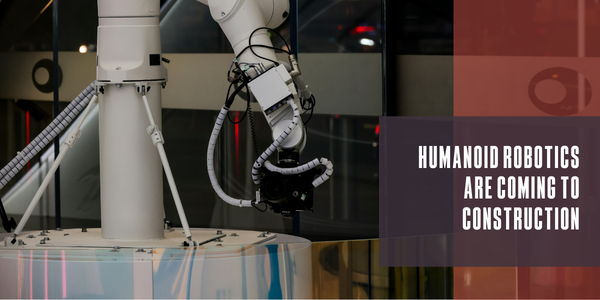
Humanoid robotics are coming to construction
By Cotney Consulting Group.
Why roofing operations must prepare for automation now.
For most roofing contractors, humanoid robotics still sounds like something far off and interesting, maybe even impressive, but not immediately relevant to the realities of running crews, managing risk and protecting margins. That reaction is understandable. Construction has heard plenty of “next big thing” predictions over the years, many of which never moved beyond headlines.
But the conversation around robotics is changing, and not because of speculation or science fiction. It is changing because artificial intelligence is no longer confined to software. It is moving into physical execution.
Recent announcements by companies like Hyundai Motor Group and its robotics subsidiary, Boston Dynamics, confirm that advanced humanoid robotics are being developed not as experimental novelties but as scalable industrial tools. While these systems are being deployed first in manufacturing environments, their long-term implications extend well beyond factory floors.
The most critical question for roofing contractors is not when robots arrive on jobsites. The real question is whether our operations are ready for them when they do.
The industry is focused on the wrong question
When new technology emerges, construction tends to ask two questions: Will it replace workers? And how soon does it affect me? Both are the wrong places to start.
History shows that construction rarely adopts technology first. It also shows that once value is proven, adoption happens quickly. Telematics, drones, BIM coordination and digital estimating all followed the same path — initial skepticism, limited early use, then rapid normalization once benefits became clear.
Humanoid robotics will follow a similar curve. Not overnight, and not everywhere at once, but steadily and intentionally. What makes this shift different is that robotics does not simply plug into existing workflows. It exposes them.
Unlike software tools, robots require structured processes, clear task boundaries, disciplined supervision and reliable data. They do not adapt well to chaos. That reality will matter far more than the hardware itself.
Why manufacturing announcements matter to roofing
It is easy to dismiss factory-based robotics as unrelated to construction. After all, manufacturing environments are controlled, repeatable and predictable conditions rarely found on roofing jobsites.
But manufacturing is not the end goal. It is the proving ground.
Factories allow robotics developers to validate durability, decision-making and safety systems, as well as human-machine interaction, at scale. Once those capabilities mature, the question becomes: where else can they add value? Labor-intensive industries with safety exposure, workforce shortages and logistical complexity quickly rise to the top of that list.
Roofing checks all three boxes.
Roofing’s unique exposure to this shift
Roofing is often viewed as a traditional trade, but operationally, it is more exposed to automation pressures than many realize.
Labor availability continues to tighten, and safety risk remains high. Service and maintenance divisions are growing, bringing with them repeatable workflows, documentation requirements and tighter response expectations. At the same time, material handling, staging and logistics consume more labor hours than most contractors track accurately.
These are not areas where robots replace roofers. They are areas where intelligent assistance reduces strain, risk and inefficiency.
That distinction matters.
This is not a replacement story
One of the most persistent fears surrounding robotics is workforce displacement. In roofing, that concern deserves a more grounded discussion.
Early adoption of humanoid robotics will not focus on replacing skilled trade labor. The technology is not ready for that, and economically, it would not make sense. Instead, initial use cases will center on assistance — material movement, inspection support, documentation and work in higher-risk zones where exposure can be reduced.
In practical terms, this means fewer hours spent carrying, staging, retrieving or repeatedly inspecting, and more time focused on judgment-driven work that requires experience and skill.
Robotics, when introduced responsibly, augments crews. They do not eliminate them.
The real gap is operational readiness
The most significant barrier to successful robotics integration will not be cost or technology. It will be operations. Most roofing companies today lack:
- Standardized workflows across crews
- Clearly documented task ownership
- Consistent job costing tied to labor activity
- Defined asset management responsibility
- Formal safety protocols for human–machine interaction
These gaps already affect performance. Robotics will make them visible faster.
Companies with disciplined operations will be able to evaluate, pilot and eventually integrate robotic assistance effectively. Companies operating on tribal knowledge and improvisation will struggle regardless of how advanced technology becomes.
Preparation beats prediction
Roofing contractors do not need to buy robots today. They do not need to chase headlines or invest in experimental tools. What they do need is to strengthen the foundation on which future technology will rely. That means:
- Standardizing processes
- Improving data discipline
- Developing supervisors who understand both people and systems
- Modernizing safety documentation
- Thinking intentionally about how work is organized, assigned and measured
Humanoid robotics will not arrive suddenly or universally. But when it does come, it will favor companies that are already operationally mature.
This series will explore what that readiness looks like, where robotics is most likely to enter roofing first, and how contractors can prepare their organizations, not just their technology stacks, for what comes next.
The future of roofing will not be human or a robot. It will be working within operations that are ready to support them.
What this series will explore next
This series will continue by examining where humanoid robotics is most likely to enter roofing operations first, why construction presents unique challenges for automation and what operational readiness will determine successful adoption. The focus will remain on practical leadership decisions rather than technology speculation.
Learn more about Cotney Consulting Group in their Coffee Shop Directory or visit www.cotneyconsulting.com.
Recommended For You

JobNimbus introduces phase two of new sales experience with SumoQuote
Read More ...
Drone technology allows for safer home inspections
Read More ...
Eagleview and SkyWatch announce alliance to expand access to ultra high-resolution aerial imagery
Read More ...
UP TO THE MINUTE







Comments
Leave a Reply
Have an account? Login to leave a comment!
Sign In