









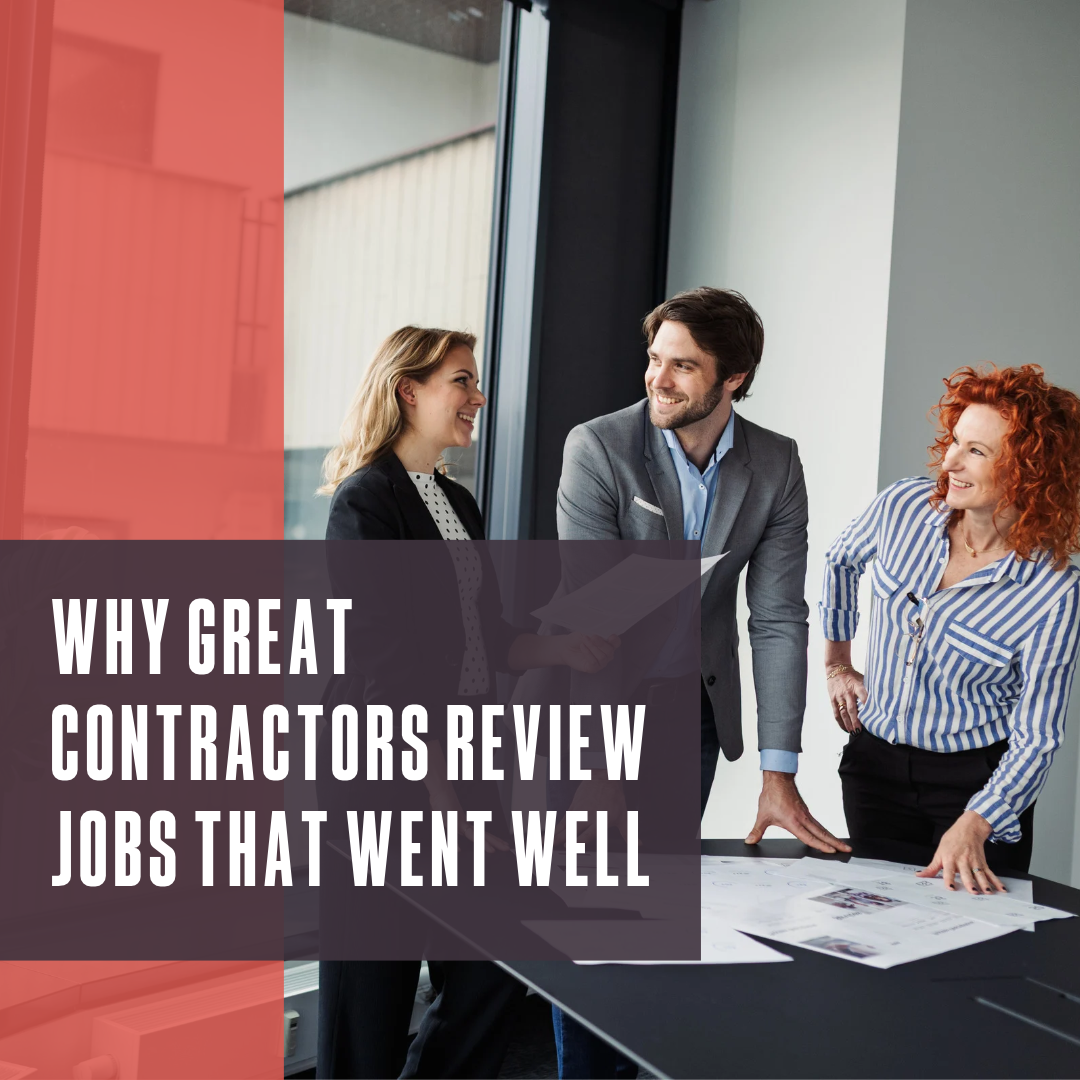
Why great contractors review jobs that went well
By John Kenney, Cotney Consulting Group.
Successful projects don't just generate profit. They generate knowledge.
One of the biggest mistakes I've seen throughout my career is that roofing companies spend far more time studying failure than they do success. Think about what usually happens after a project loses money. The estimate is reviewed. Labor hours are analyzed. Project managers are asked what happened. Foremen explain the challenges they encountered. Leadership gathers around conference tables trying to identify where things went wrong and how to keep it from happening again. That's a worthwhile exercise.
But I've often wondered why we don't show the same level of curiosity when a project goes exceptionally well. Some of the most valuable lessons I've learned in this industry didn't come from difficult projects. They came from the ones that seemed almost effortless. The projects where communication flowed naturally. The crews stayed productive. Materials arrived when they were needed. Customers remained informed. The schedule held together. The project closed successfully.
Those jobs weren't successful because everything happened perfectly. They were successful because a lot of people made good decisions before problems had the opportunity to grow. Unfortunately, once a profitable project is complete, many companies move on to the next one. The final invoice is sent. The file is closed. Everyone gets busy. An opportunity to learn quietly disappears.
I've always believed success leaves clues just as failure does. The question is whether leadership takes the time to find them. One observation that's stayed with me over the years is that exceptional projects usually aren't built on extraordinary moments. They're built on ordinary disciplines performed consistently. The estimate accurately reflected the work. The project handoff was thorough. Materials were staged correctly. Communication stayed ahead of production. Questions were answered before they became delays.
None of those actions attract much attention individually. Together, they create projects that seem almost easy.
I've walked enough successful jobs to know they rarely happened by accident. Someone planned well. Someone communicated clearly. Someone anticipated challenges before they became problems. Someone followed through on commitments that most people never noticed. That's operational excellence.
Another lesson experience has taught me is that successful projects tend to create false confidence. Leadership looks at the financial results, everyone is pleased and the assumption becomes that the company executed well. Maybe it did. But do we actually know why?
- Which conversations made the biggest difference?
- Which decisions protected production?
- Which planning activities prevented delays?
- Which leadership behaviors helped the crew perform at its best?
Those answers deserve just as much attention as the questions we ask after difficult projects.
I've often encouraged contractors to treat successful jobs as teaching opportunities. Bring the estimator into the discussion. Invite the project manager. Include the superintendent or foreman. Ask everyone the same simple question. "What made this project run so well?"
The answers are rarely dramatic. Sometimes, better communication during the handoff is better. Sometimes it's a customer who responded quickly to questions. Sometimes it's a project manager who consistently stayed ahead of procurement. Sometimes it's simply a crew that understood the expectations before work ever began. Those observations matter because they identify behaviors worth repeating.
I've found that average companies often focus on fixing weaknesses. Exceptional companies spend just as much time reinforcing strengths. There's an important difference. If leadership only studies problems, employees begin believing that reviews exist to assign blame.
When leadership also studies success, reviews become opportunities to learn. That changes the culture. People become more willing to share ideas. They become more engaged in improving the operation. They begin by looking for successful habits rather than simply avoiding mistakes. That's a healthier environment for everyone.
One thing I've learned after many years of reviewing projects is that profitable jobs usually don't happen because one person performed exceptionally well. They happen because several people quietly performed their responsibilities consistently:
- The estimator communicated clearly.
- The project manager stayed organized.
- The superintendent prepared the crew.
- The foreman maintained production.
- Accounting kept information moving.
Leadership remained engaged without creating unnecessary distractions.
When everyone did their part, nobody needed to be the hero.
I've also noticed something else. Companies that regularly review successful projects tend to become more predictable over time. Why? Because they're identifying repeatable behaviors instead of hoping success happens again. They aren't relying on luck. They're building operational knowledge.
Every successful project becomes another example of how the company wants work performed. That knowledge gradually becomes part of the culture. New project managers learn from experienced ones. Foremen understand what leadership values. Estimators gain confidence in production assumptions because they receive meaningful feedback from the field. The organization becomes stronger because success is no longer viewed as an outcome. It's viewed as a process.
I've never believed continuous improvement comes only from correcting mistakes. It also comes from understanding why good work became exceptional. That's where future success is built.
As roofing companies continue to face labor challenges, changing customer expectations and increasing competition, learning becomes one of the most valuable competitive advantages any organization can develop.
The companies that improve year after year aren't simply fixing what went wrong. They're identifying what went right and making sure it happens again. Because successful projects don't just generate profit. They generate knowledge. And knowledge, when it's shared throughout the organization, becomes one of the few competitive advantages your competitors can never easily duplicate.
Learn more about Cotney Consulting Group in their Coffee Shop Directory or visit www.cotneyconsulting.com.
Recommended For You
Understand how credit card fees benefit your margin for roofing success
Read More ...
Shining the spotlight on the customer at every stage of business
Read More ...
The 4-stage success strategy
Read More ...
UP TO THE MINUTE







Comments
Leave a Reply
Have an account? Login to leave a comment!
Sign In