UP TO THE MINUTE










Protecting roofs in WUI zones
By Emma Peterson.
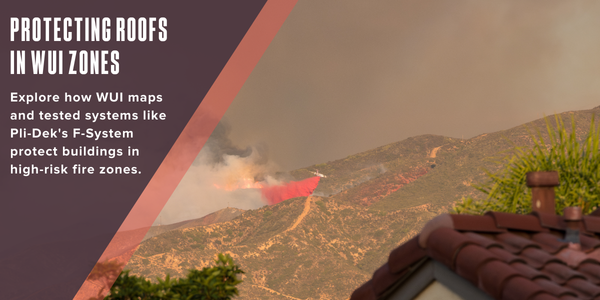
Explore how WUI maps and tested systems like Pli-Dek's F-System protect buildings in high-risk fire zones.
Over the last decade, wildfires have been on the rise. The New York Times reported in October 2025, “That catastrophic wildfires with both high economic costs and loss of human life are, indeed, happening more often, and that those fires are strongly linked to climate change.” In the face of natural disasters like fires, it can feel like there is nothing to be done. But there are choices consumers and contractors can make to better prepare homes to face the flames. In a new episode of CoatingsCast™, Megan Ellsworth is joined by Adrienne Malek and Jan Bagnall from Pli-Dek for a conversation about building in Wildland Urban Interface zones.
Wildland Urban Interface (WUI) zones are areas where urban development meets natural reserves like Forest Service lands. Adrienne explained, “It's where the interface between nature and man happen. It’s a popular place to live because it allows people to get out of the city and into nature more easily. But it also comes with downsides, for example, in the face of more severe fire seasons, we’re seeing more residential and commercial buildings that are destroyed or have gotten damaged due to wildfires that start in those natural areas.”
As a result of this, state governments are creating maps of WUI areas and rating them based on fire risk. Adrienne shared what this looks like in their home state of California, saying, “There's a map that has now been in existence for a while that rates the severity of the fire zones based off of literally an address, but based off of what took place in January of this year and the horrific fires that happened in LA County, those zones are being reevaluated and expanded.” This assessment of the map takes into account a variety of factors, including proximity to natural areas and weather conditions like wind that can increase the spread of fire.

In addition to these WUI maps, the California government has also released a list of fire-rated products that are recommended for use in WUI zones. And included on this list is Pli-Dek's F-System. Jan dove into what makes this system perform so well in the face of fire, saying, “We specify a construction method of installing the system that involves putting a polymer cement down early in construction. So, right after framing is done, the contractor is going to install sheet metal flashing around the perimeter at doors, walls, decks and drip edge flashing post. Then they’ll open up plywood seams to allow for expansion/contraction and install an expandable lathing, which is a 2.5 grade G60 with a polymer cement, which is over 6,000 PSI.” This base construction is incredibly strong and the inclusion of the cement helps increase the fire resistance of the entire system.
But that’s not all the F-system is. Jan explained, “After that base is done, the contractor puts non-combustible products, like fiberglass, resin and some other polymer cements, on top of that to create that textured finish. The last step is sealer, which is water-based. Nothing in the F-System has any type of butyl or urethanes in it that would catch on fire.” The result of all this engineering and design? A powerful roof system that has been proven and rated to perform and protect in WUI.
Read the transcript, Listen to the episode or Watch the recording to learn more about Pli-Dek, WUI rated products and more.
Learn more about Pli-Dek in their Coffee Shop Directory or visit www.Pli-Dek.com.
About the author

Emma is the senior content developer at The Coffee Shops and AskARoofer™. When she's not working or overthinking everything a little bit, she enjoys watching movies with friends, attending concerts and trying to cook new recipes.
Recommended For You

How SPFA brings the industry together
Read More ...
Turbocharge your roofing business with the right tech tools
Read More ...
Creating collaboration across a continent
Read More ...
UP TO THE MINUTE





Comments
Leave a Reply
Have an account? Login to leave a comment!
Sign In